
Cell Biology Products
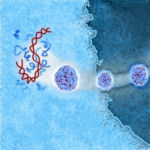
Rapid Mycoplasma PCR in Cell Cultures Mycoplasma contamination remains one of the most critical challenges in laboratory cell culture maintenance, known to compromise experimental validity through altered cell growth rates, chromosomal abnormaliti..
Mycoplasma Stain Kit provides an ultrasensitive, rapid and simple fluorescence microscopic assay for the visual identification of mycoplasma infection in laboratory cell cultures. In order to detect mycoplasma, the fluorescent MycoFluor reagent is ad..
Caspase-3/7 Apoptosis Assay Kit provides a method for detecting apoptosis by providing a simple and reliable method for assaying caspase-3/7 activity. The kit can be used to continuously measure the activity of caspase-3/7 in cell extracts and purif..
Mitochondrial Membrane Potential Detection Kit provides a quick and reliable method to detect the mitochondrial membrane potential changes in apoptotic cells using flow cytometry. The loss of mitochondrial membrane potential is a hallmark for ap..
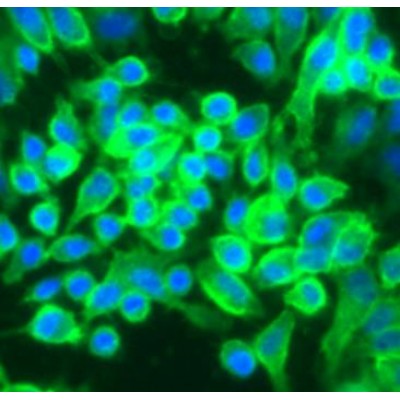
DiO is a green fluorescent, lipophilic carbocyanine and widely used as a lipophilic tracer. It is weakly fluorescent in water but highly fluorescent and quite photostable when incorporated into membranes. It has an extremely high extinction coefficie..
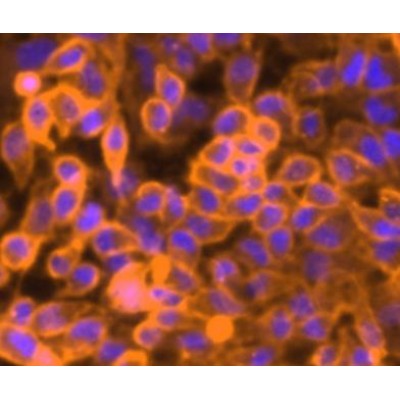
DiI is an orange-red fluorescent, lipophilic carbocyanine and widely used as a long-term tracer for neuronal and other cells. It is weakly fluorescent in water but highly fluorescent when incorporated into membranes. Once applied to cells, the dye di..
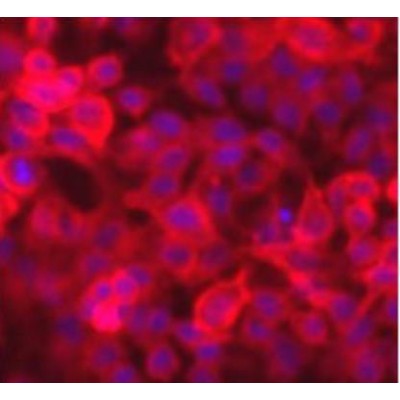
DiD is a far-red fluorescent, lipophilic carbocyanine and widely used as a lipophilic tracer. It is weakly fluorescent in water but highly fluorescent when incorporated into membranes. It has an extremely high extinction coefficient and short excited..
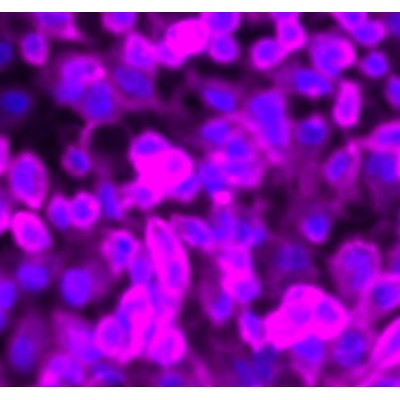
DiR is a near IR fluorescent, lipophilic carbocyanine and widely used as a lipophilic tracer. It is weakly fluorescent in water but highly fluorescent when incorporated into membranes. It has an extremely high extinction coefficient and short excited..